

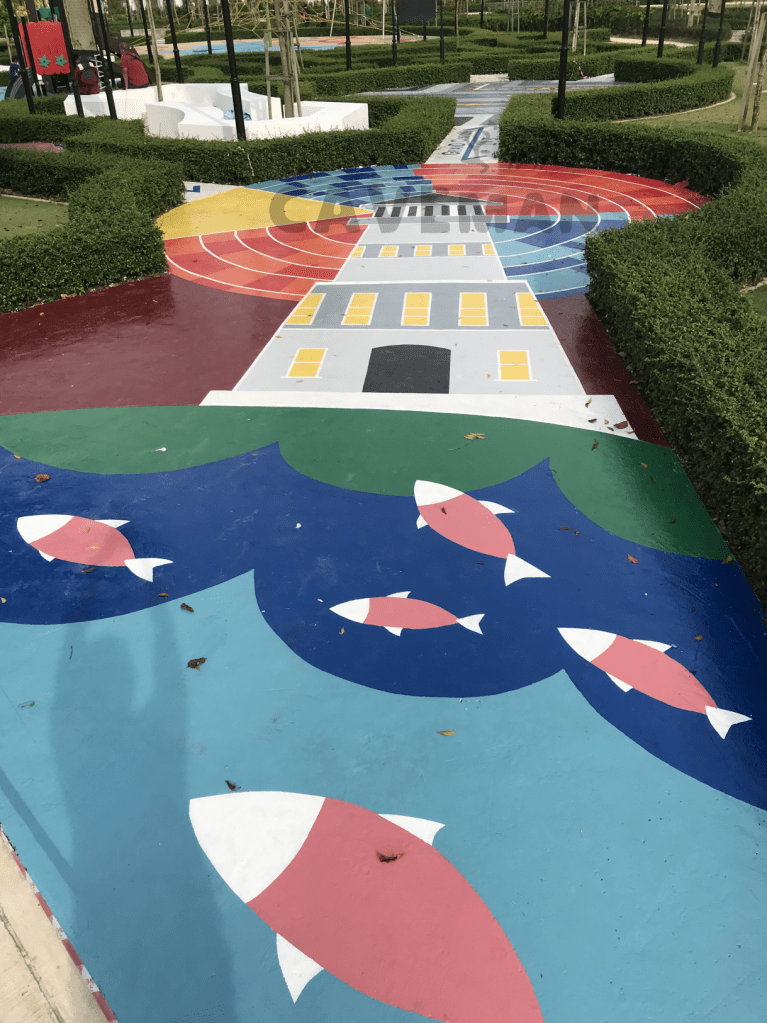
Painting on the wall and painting on the floor essentially are the same but both inherit their own challenges. Most technical part such as scaling and transposing are the same – Instead of transposing on a vertical surface, you deliver it on a horizontal surface. However, the challeges are as follow.
Challenges of floor painting
Human activity

Since your artwork is on the floor, it has to account for human activity above it. For example, one of our artwork was done at a park for housing developer Ecoworld. You can see below, that the shape of the floor was designed for the artwork. In a park, your artwork will be prone to not only trampling and even bicycling. Therefore the artwork has to endure abrasion and wearing.
Rain and moisture

I’m assuming you’re painting on a concrete surface. If your artwork is exposed to the air and rain, and your floor surface is not waterproof from beneath the foundation, you will face moisture problems. Different concrete grade has different rate of permeability (Permeability – the ability of concrete to be resistant to flow of water). If so happen your concrete has a high permeability, water will seep through the high porosity of your concrete floor surface and get trapped underneath your paints. When such moisture and water is trapped has been exposed to high temperatures from direct sunlight, the water will vapourise and cause bubbling on the surface. Therefore, a strong adhesive paint is needed to counter the force of the vapourisation.
Dust, dirt and mold
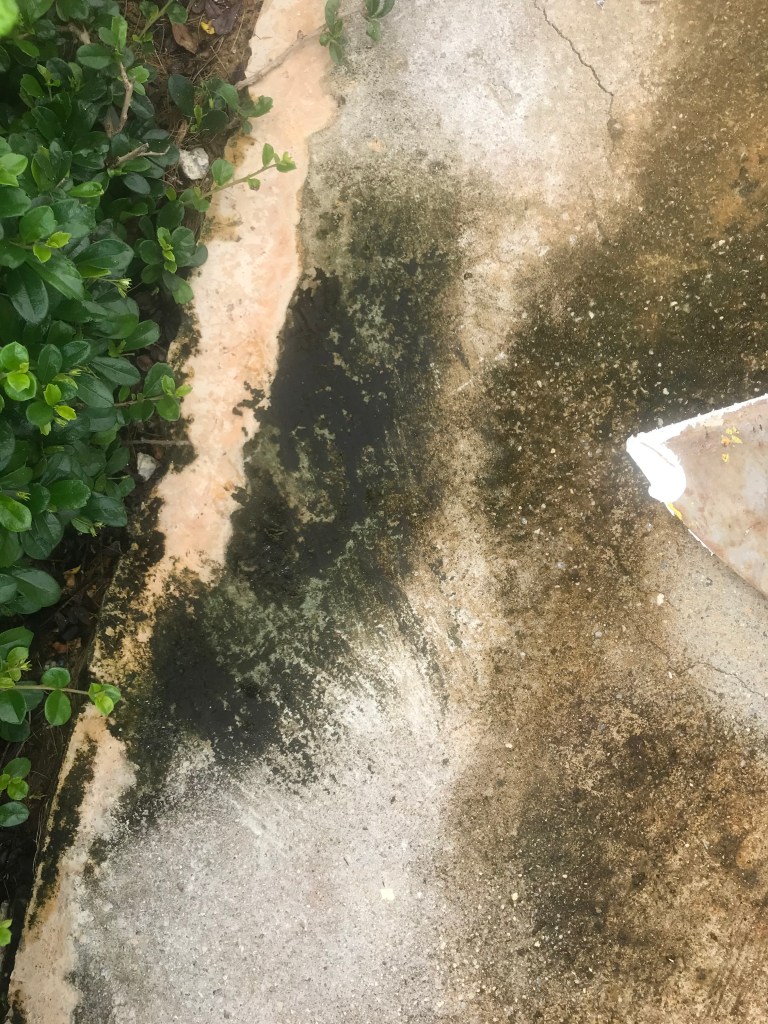
Unless your concrete floor is painted immediately after casting and curing for 28 days, your floor may be infested with dust, dirt and especially mold. Such infestation has to be removed prior painting works. Chemicals shall be used to eliminate molds (we will use the appropriate chemical for it), and a deep scrubbing is needed for the floor.
There are currently 3 ways to do it and here are the types of paint for your painting.
Floor coating painting
Floor coating paints are used to paint sport courts such as tennis or basketball courts. The paint is then transposed on the floor with rollers or brushes. The catch of this paint is locally they only come in 5 litres. There are some colours in the artworks that do not require such volumn and it will go to waste.
This paint is recommended to do for large painting 50m2 and above with minimal colours involved.
Epoxy painting
Epoxy paints are designed to be used on concrete floors or steel surfaces. There are commonly adopted on factory floors, parking lots, retail stairwells and much more. The tricky part of handling epoxy is that the paint pigment has to be mixed with a hardener before being able to use. Epoxy paints have extremely good adhesion and is able to stick to surfaces hard. In wall painting, we commonly use a base primer or sealant to allow the acrylic paint to stick better to the masonry or plastered wall surface, however because there will not be much trampling on the wall surface, such degree of adhesion is not required. It is gravely mistaken to use acrylic wall paint to be painted on floors. Gloss epoxy can be slippery.
This paint is normally used in factory/storeroom floors, parking lots, retail spaces and anywhere on concrete in an indoor space where they are large vehicles or moving parts.
Polyurethane painting
The only difference between Polyurethane paint and Epoxy paint is that Polyurethane paint is used for outdoor surfaces and like Epoxy, it is commonly painted on concrete and steel surfaces. Polyurethane paint contains chemical properties that protects against UV for colour fading, rain and sunlight. It is also resistant to chemical spills that may damage other types of floors. One of the most underrated properties is the ability for Polyurethane paint to be recoated – meaning being paint above existing Polyurethane paints. Epoxy can also be repainted however it’s adhesion will not last: Wordings for example. Polyurethane paint has to be mixed with hardeners as well prior painting. The drawback of using Polyurethane paint is its high price as it almost doubles the Epoxy paint.
For mural/graffiti/artwork painting, this paint can be used outdoors on concrete floors, parks, tar roads, and steel surfaces such as water tanks, trucks, roller shutters and shipping containers.

Reminder
Never ever use wall acrylic latex paints for painting on concrete floors. We have learned it the hard way where even though a layer of sealant has been applied, the paint will not be able to endure the abrasion. Couple with high permeability with moisture seeping from beneath, bubbling will occur all over the floor and within a month, your artwork will peel off like paper and your artwork will be ruined.
One last piece of tip we can share is with the use of masking tapes. Do not leave a masking tape exposed to the sun for more than 24 hours or else your floor will be prone to ripping out the paint on the floor leaving behind sticky residues.
Our services
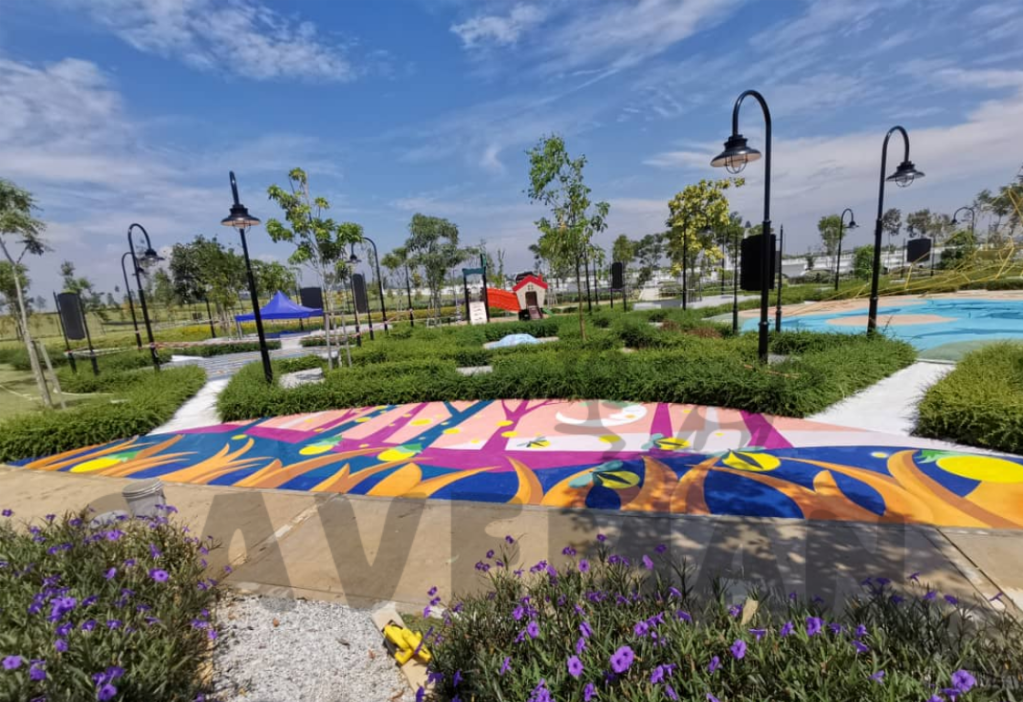
We have the experience as a mural artist and technical enough to paint on floors. We would also love to collaborate with anyone who wishes to paint murals on floors. If you happened to need our services, feel free to get in touch with the Caveman team at
Han – 0166850069
Just whatsapp or give us a call and we will try to assist you whatever your inquiries are. We openly welcome anyone or other artists to paint together with us.
 Caveman Murals